
The global fiber optic industry is witnessing an unprecedented crisis—and opportunity. Today, single-mode fiber prices have skyrocketed to $27 USD per kilometer, marking a staggering increase of over 500% from early 2025 levels. What’s driving this historic rally, and when will prices stabilize?
The Perfect Storm: Why Fiber Prices Are Exploding
If you’ve sourced optical fiber in the past three months, you’ve likely experienced sticker shock. The market has transformed from a buyer’s paradise to a seller’s fortress almost overnight. Single mode fiber prices in the Chinese market—the global benchmark—have surged from approximately 16 yuan ($2.33 USD) per kilometer in January 2025 to over 40 yuan ($5.83 USD) by early 2026, with spot market prices now reaching 50 yuan ($7.30 USD) or more . That’s a minimum 150% increase in local currency, and with today’s export prices hitting $27 USD per kilometer, international buyers are feeling the crunch even harder due to currency fluctuations.
But these figures tell only part of the story. The reality is far more dramatic: some specialized g 657a2 fiber grades have seen price multiples of 4x to 5x, with availability becoming the primary concern over cost . This isn’t merely inflation—it’s a structural realignment that industry analysts are calling the most significant since the dot-com era.
So why is this happening? Three catastrophic demand vectors are colliding with immovable supply constraints.
The Three Drivers of the Fiber Famine
1. AI Data Centers: The Insatiable Beast
The rise of generative AI and hyperscale computing has rewritten the rulebook for bandwidth consumption. Unlike traditional telecommunications infrastructure, AI data centers require massive amounts of single mode fiber for internal cluster connections and Data Center Interconnect (DCI).
A single “million-card” GPU cluster can consume tens of thousands of fiber kilometers . According to Guotai Junan Securities, AI-driven data center fiber demand is projected to grow from less than 5% of global consumption in 2024 to an astonishing 35% by 2027 . This isn’t linear growth—it’s exponential.
The scale is mind-boggling. Meta’s recent $6 billion agreement with Corning for AI data center cabling alone equals Corning’s entire 2025 optical communications revenue . When tech giants are locking in supply at this magnitude, smaller buyers are left scrambling for leftovers.
2. FPV Drones: The Unexpected Game-Changer
Perhaps the most surprising demand surge comes from an unexpected source: modern warfare. In the Russia-Ukraine conflict, fiber-optic tethered drones have emerged as a game-changing technology, immune to electronic jamming and capable of precision strikes at distances up to 40 kilometers .
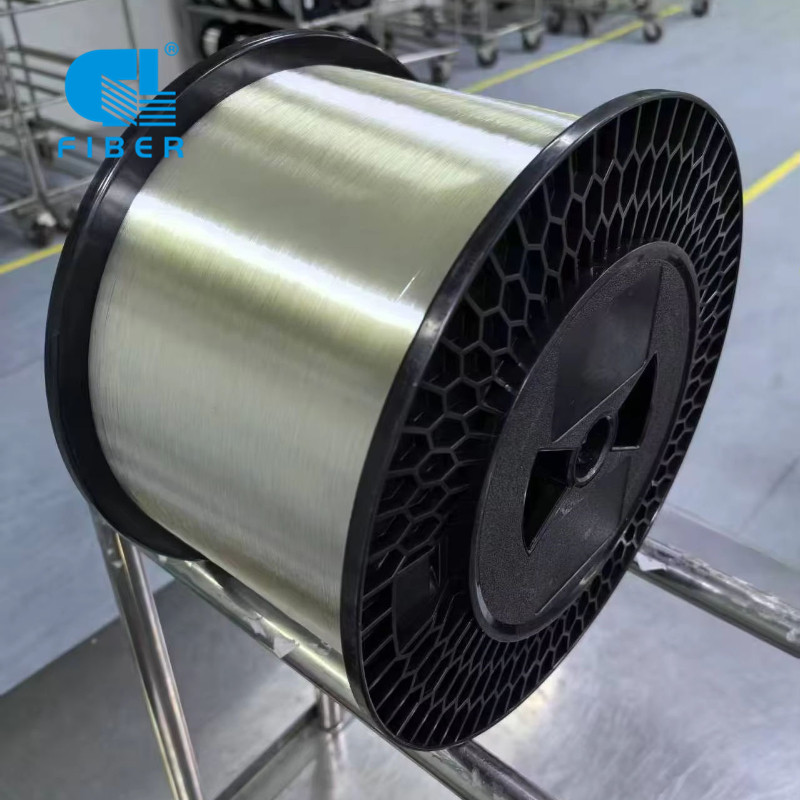
These First-Person View (FPV) drones spool out ultra-thin bare optical fiber as they fly. The fiber of choice? G657A2 fiber, prized for its exceptional bend resistance that allows compact spooling on small drones while maintaining signal integrity in harsh battlefield conditions .
The numbers are staggering. Russia and Ukraine together consume an estimated 50-60 million kilometers of fiber optic drones cable annually—roughly 10% of global production . Russia’s only domestic optical fiber factory in Saransk was damaged by Ukrainian drone strikes in April-May 2025 and remains offline, making China the indispensable supplier .
Vedomosti reports that Russian military demand has driven Chinese fiber cable prices from 16 yuan to 40 yuan in just one year—a 150% increase—with some spot markets seeing 400% spikes . This isn’t a niche market anymore; it’s a major demand center consuming massive manufacturing capacity.
-
Market Alert: G657A2 Fiber Hits $32/KM
The global fiber optic market is experiencing a pa…
-
The Perfect Storm: How Geopolitics and AI are Driving the G657A2 Fiber Price Surge
The global fiber optic market is experiencing a pa…